The Pause Before an Answer: What a Scene Lets Silence Do
The pause before an answer shifts a film scene’s attention: learn to follow timing, reactions, sound, and the relationship without forcing a single meaning.
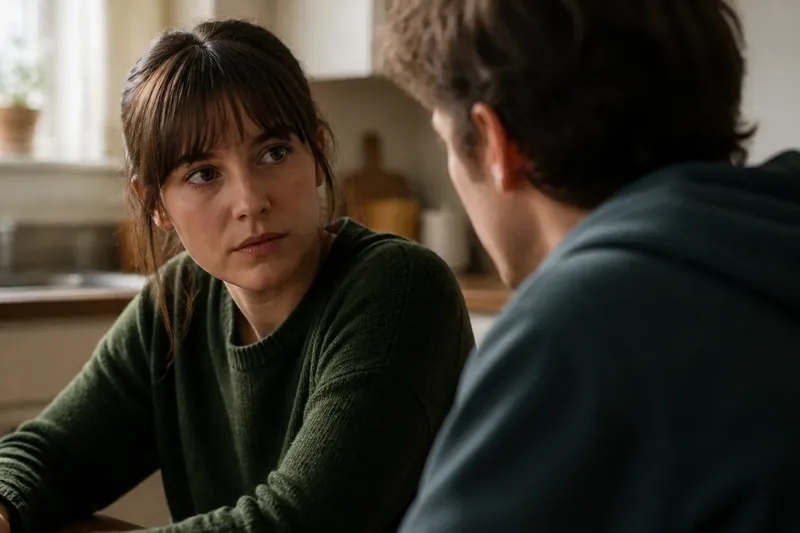
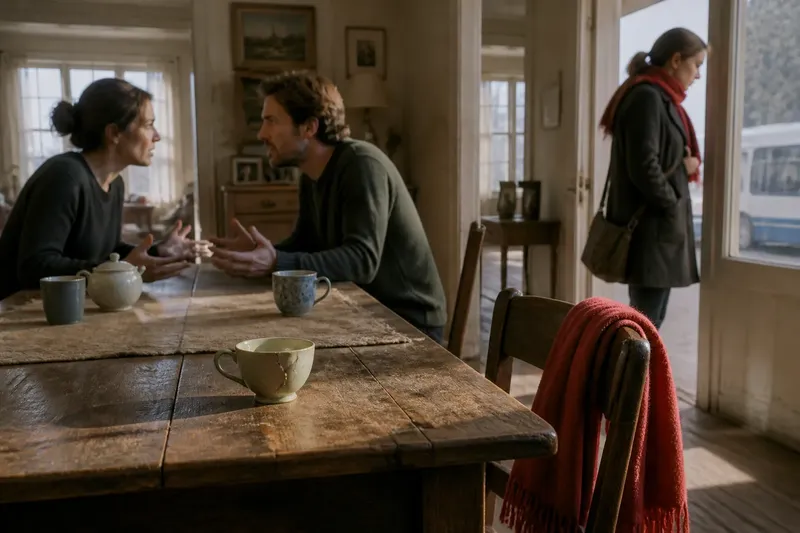
In a kitchen scene, one character asks, “Are you coming?” The other turns a spoon in a mug, glances toward the door, and waits before answering. In a film scene, that pause before an answer shifts attention from the question to the choice unfolding in front of us.
Rather than treating silence as a code to crack, follow how the scene organizes the moment: who gets to speak, what the camera keeps visible, and how the exchange changes afterward. These observations help you describe a performance precisely while leaving room for more than one interpretation.
Follow how the scene directs your attention
Notice what remains in view while the answer is withheld. A close shot of the listener may make their reaction the event; a wider frame may emphasize the distance between the characters or their place in the room. If the edit stays with the person waiting, the scene may ask you to experience the delay from their side.
Then check whether the camera changes position or the scene cuts away. A cut to a clock, a doorway, or another character can redirect attention, but it does not automatically explain the pause. Describe what the image makes prominent before deciding what it might mean.
Notice how the performance occupies the gap
During a pause, small physical choices become easier to notice: a character may keep handling an object, stop mid-gesture, or hold someone’s gaze. The detail matters in relation to the question and the reply, not as a gesture with a universal translation.
Compare the character’s behavior before and during the gap. If their hands continue a routine while their face turns toward the speaker, the scene may hold ordinary action and focused attention together. If movement stops, that stillness may make the exchange feel more exposed, though the film may leave the cause unclear.
Pay attention to the other performer, too. A listener who waits quietly creates a different exchange from one who interrupts, looks away, or begins another task. The pair’s timing—not just one person’s expression—shapes what the pause feels like.
Hear the soundtrack as part of the exchange
Speech can stop while the soundtrack continues. A refrigerator hum, traffic, a chair creak, or clothing rustle may keep the room present and make the gap feel unusually exposed. Listen for whether a sound stays steady, becomes more noticeable, or interrupts the wait.
Music can also change the way a pause lands. A score that continues may carry feeling across the silence; a sudden drop in music may leave the voices and room tone more exposed. Avoid treating either choice as a fixed signal: connect what you hear to the scene’s pacing and image.
Compare the pause with the answer
When dialogue resumes, listen for the relationship between the wait and the words. A direct answer may close the question, while a joke, a new question, or a change of subject may keep it open. The delay can make that redirection more noticeable without proving why the character chose it.
Also observe what the answer does to the other person. Do they accept it, repeat the question, or turn away? Their next action helps show how the exchange moves forward, even if the film does not settle what either person privately feels.
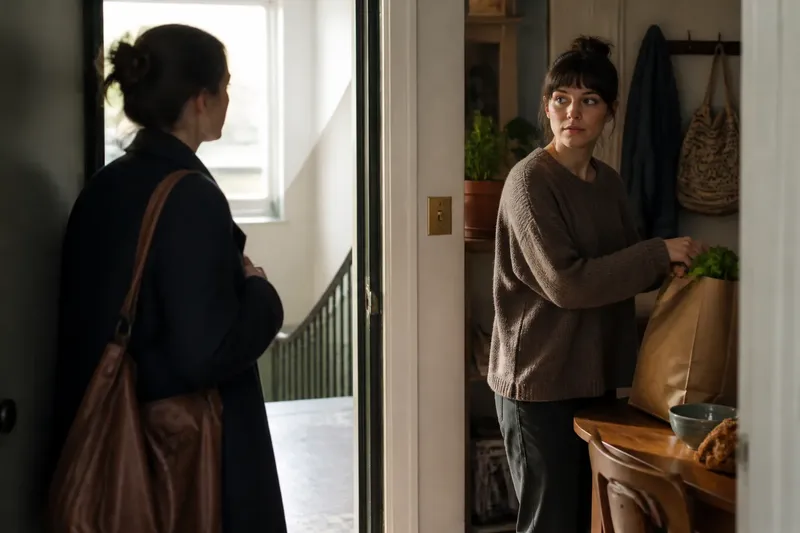
Imagine a fictional scene in which a tenant asks a neighbor whether they plan to attend a building meeting. The neighbor pauses to set down a grocery bag, looks toward the open stairwell, and replies, “I’ll see.” The tenant picks up their coat and leaves the doorway open; the observable result is that the conversation remains unresolved, while the neighbor’s eventual choice is still unknown. That distinction keeps a reading tied to what the scene actually presents.
Describe what happens before deciding what it means
A useful note can separate observation from interpretation: “She waits, keeps her eyes on the table, and answers after he repeats the question” records visible events. “She is hiding something” goes further and needs support from the rest of the scene or film.
Use this brief viewing checklist to keep the description specific. For each item, note the observation and follow the decision that fits what you see:
- Check who speaks first after the question; if the same character controls the exchange, describe that pacing, and if someone else interrupts, note how the interruption changes it.
- Check where the camera holds; if it stays on the listener, discuss the reaction the frame emphasizes, and if it cuts away, describe what the new image redirects you toward.
- Check whether the waiting character moves; if a gesture continues, connect it to the timing of the reply, and if the body becomes still, describe that contrast without assigning it a fixed emotion.
- Check what the listener does; if they wait, note how the scene sustains the gap, and if they interrupt or turn away, explain how their action changes the exchange.
- Check what remains audible; if room sound continues, identify what it keeps present, and if music or another sound shifts, describe how that alters the pause’s texture.
- Check how the reply addresses the question; if it answers directly, note that the exchange closes on an answer, and if it redirects, name the new topic or action while leaving the character’s motive open.
What should you look for in a film pause?
Does every pause suggest deception?
No. A character may be thinking, choosing careful words, reacting to pressure, or taking time for reasons the scene never explains. Use the surrounding performance and dialogue rather than treating delay as proof of a secret.
How can you tell a held beat from difficulty answering?
Look at the full exchange: the actor’s movement, the other character’s attention, the camera, and the soundtrack. A composed performance can still hold a dramatic beat, while a visible search for words may put more emphasis on the difficulty of beginning; neither observation alone settles the character’s motive.
What if no one reacts to the silence?
Record that both characters remain composed and consider how the scene frames their shared stillness. It may suggest a familiar routine or leave the question hanging, so avoid choosing between those readings without further evidence.
Should you count the seconds?
Usually, exact counting is not worth the effort because it can distract from the image, performance, and sound. Describe the gap as brief, sustained, or interrupted, then note what changes before speech resumes.
Keep the reading tied to the scene
For a film scene’s pause before an answer, start with the sequence of observable choices: who waits, what the performers do, what the camera shows, and how the exchange resumes. Then offer an interpretation that fits those details without turning one gesture into a universal symbol.
One useful final distinction is between what the scene leaves unresolved and what it makes clear. You can describe the effect of an unanswered question—an interrupted conversation, a changed rhythm, or a listener left waiting—without claiming to know the private reason behind it.