Close-Up or Two-Shot: Choosing the Distance for a Conversation
Close-up or two-shot analysis helps you trace how framing shifts attention between speakers, reveals listener reactions, and shapes the feel of a film conversation.
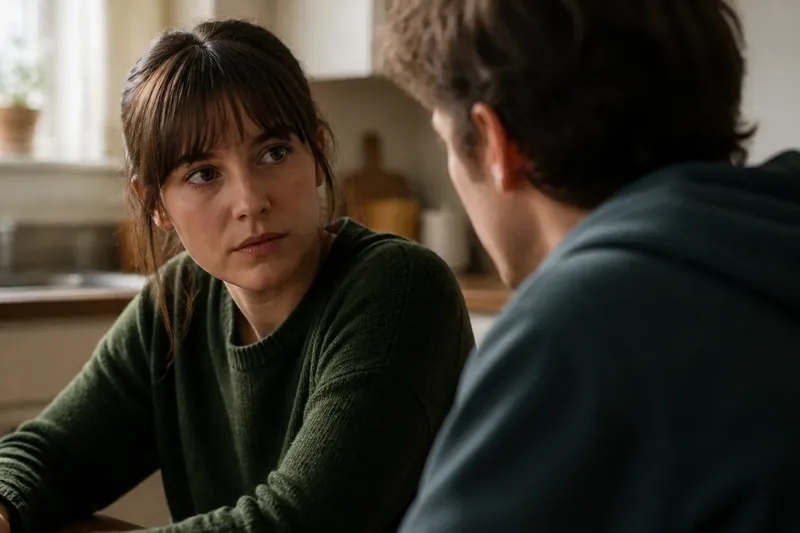
A character turns toward the person beside them, but the camera stays on the listener’s face. Close-up or two-shot analysis can explain why that choice makes a conversation feel private, tense, or uneven: framing decides which parts of the exchange reach the viewer’s attention.
Watch the scene once for its basic movement, then follow how the camera distributes attention as the relationship shifts. The useful question is not which shot looks more intimate, but what the framing lets you see and how that changes the way the performances register.
Identify the framing and follow the exchange
Choose a scene with at least two people speaking in the same space. On the first viewing, let it run without pausing. Note who begins, who answers, whether anyone changes position, and when the emotional balance seems to shift.
On a second viewing, identify the framing. A close-up gives one face or a small part of a person’s body most of the image. A two-shot keeps two people visible together in one composition. A scene may move between these arrangements, include a shoulder in the foreground, or keep a second speaker at the edge of a close frame.
Use a notebook or a simple timeline with three columns: moment, visible arrangement, and what drew your attention. Start with descriptions you can verify. “The listener stays in frame while the speaker talks” gives you firmer footing than “the film makes the listener sympathetic.”
Notice what prompts a framing change
On another pass, pause at noticeable changes in shot size or arrangement. Mark when the camera leaves a shared view for one face, returns to both people, or holds on someone while the other speaks offscreen. You do not need to record every edit.
Connect each change to the conversation. Does someone reveal information, evade a question, take control, or hesitate? Does the camera shift with a line, a gesture, or a change in who is paying attention to whom? The timing may shape the effect as much as the shot itself.
Also note when the camera does not change. A close-up may hold through several lines, or a two-shot may remain in place during a disagreement. A sustained frame lets the performance develop within the same visual arrangement; a cut redirects attention. Neither choice has a fixed meaning apart from its use in the scene.
Read a close-up as concentrated attention
A close-up limits how much of the room and the other person you can see. It can make a slight facial adjustment legible, isolate someone trying to hold composure, or keep the viewer near a person excluded from the conversation. That closeness can feel uncomfortable rather than warm.
Ask what the shot lets you observe: a speaker’s eyes, a listener’s reaction, a tightening jaw, or a glance beyond the frame. Then note what it withholds. If the other person is no longer visible, their response may come through speech, sound, or the close-up subject’s expression instead.
The result can be an uneven encounter. A speaker may dominate the image while the listener is present only through an eyeline or an offscreen reply. Or the camera may stay close to the listener, making the speaker’s words register through their effect on the person receiving them.
A close-up does not automatically signal emotional honesty. A tightly framed face can conceal the surrounding situation, and a performance can remain controlled or difficult to read. Describe the performance first, then consider whether the scene invites trust, doubt, or simple observation.
Read a two-shot as a shared field
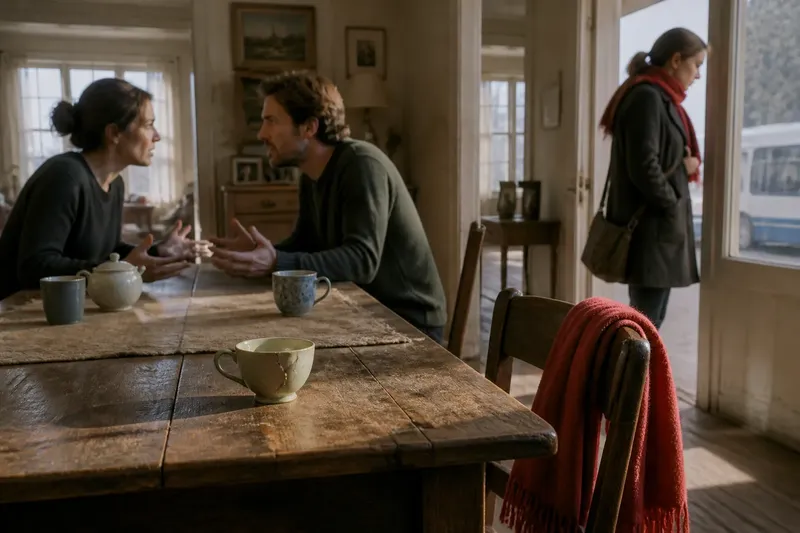
A two-shot keeps the relationship visible alongside each person’s performance. Compare posture, distance, and direction of gaze. You can see whether someone faces the other person, turns away, or reacts without waiting for a separate shot.
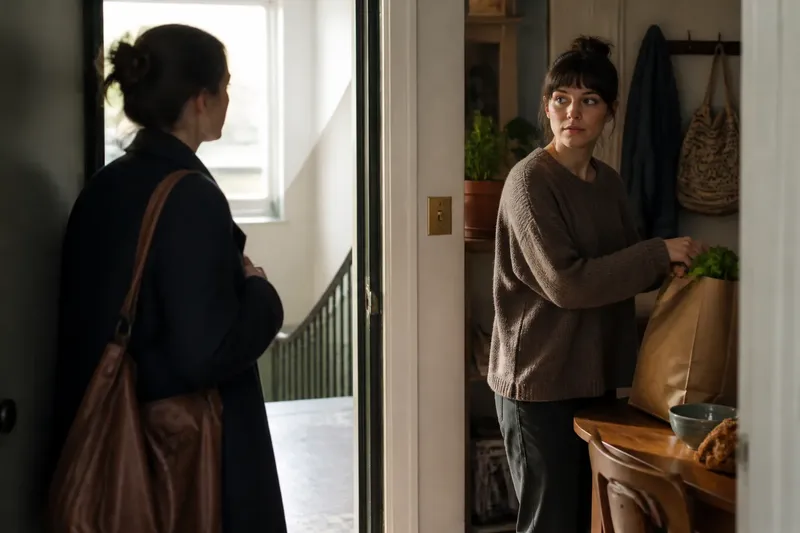
Shared visibility does not mean equal standing. One person may occupy more of the foreground, sit higher, or face the other while the second stays turned toward a door. Both remain in frame, but the composition can still make one person seem more exposed, powerful, or willing to engage.
Look at the space between them as well as their faces. A table, doorway, car interior, or crowded room shapes the available arrangement. Ask whether the setting keeps them connected, separates them, or makes one person seem confined within the frame. Describe the specific effect here rather than assigning the object a standard meaning.
A two-shot can also preserve uncertainty. With both people visible, you may have to divide your attention between the speaker and listener instead of receiving a selected reaction. Notice whether that makes the exchange feel mutual or leaves you unsure where to look.
Track who receives attention during each line
Compare the speaking sequence with the shot sequence. For each stretch of dialogue, ask who speaks, who appears, and whose behavior the camera emphasizes. The film might show the speaker throughout, cut to the listener mid-line, or hold both until someone breaks the shared arrangement.
Pay attention to reactions while someone else talks. A restrained smile, a glance toward the floor, or a shift in posture can make a listener active without giving them a line. If the framing keeps that response visible, the scene directs attention toward the person receiving the words.
Then check whether the pattern changes. A conversation might begin in a two-shot and move into close-ups as the speakers grow guarded. It might return to a shared frame after a moment of distance. Describe the transition before deciding what it suggests about the relationship.
Say you are examining an invented scene in which two siblings talk across a kitchen table. The conversation opens in a two-shot; after one admits to hiding a letter, the camera holds on the other sibling’s close-up while the first continues speaking offscreen. You note that attention has shifted to the listener, then see their expression change before they answer. The resulting interpretation is that the framing gives their reaction room to register; it does not establish whether they forgive the confession.
Connect framing to performance and sound
Separate what the actor does from what the camera does, then consider how those choices interact. A close-up may make a slight pause in a smile visible, but the performance supplies the movement and the framing gives it prominence. A two-shot may reveal someone turning away, while the staging determines whether that movement cuts off contact or simply changes their position.
Listen to the sound as well. An offscreen voice can keep an absent speaker present, while a quieter delivery may make a shared frame feel private. Note what you hear, but do not use the voice to invent an expression the film does not show.
When a close-up feels intimate, ask why: can you read a vulnerable expression, has the other person disappeared from view, or does the scene leave you with little distance from the speaker? Naming the reason makes your reading more precise and gives other viewers room to respond differently.
Use a short record to explain the scene
Write a brief account in the order the scene unfolds. Include the opening arrangement, the main shift in attention, and the ending arrangement. Support each interpretation with an observable detail: who remains in frame, where someone looks, when the camera changes, or what a performer does while listening.
- Opening view: Check whether both people share a frame; if they do, describe their positions, and if they do not, note who appears first.
- Attention shift: Check who becomes visually prominent and what happens in the exchange; if the shift follows a disclosure, connect it to that moment, and if not, describe the timing without assigning a motive.
- Listener’s reaction: Check whether the listener stays visible while the other person speaks; if a reaction appears, describe it, and if the listener is offscreen, note whether voice or silence keeps them present.
- Spatial relation: Check distance, orientation, and any object between the speakers; if the arrangement divides them, describe the visible boundary, and if it does not, avoid implying a barrier.
- Shot duration: Check whether a close-up or two-shot holds through several lines; if it holds, consider how the performance develops within it, and if it changes, note what draws attention next.
- Ending view: Check whether the scene ends with both people visible; if so, describe their final arrangement, and if not, state who remains offscreen and what sound or action continues.
It is not worth counting every cut or assigning a fixed meaning to each shot size. That can turn attentive viewing into clerical work. Keep only the observations that help explain how this conversation directs attention.
Which framing questions clarify a conversation?
Does a close-up always make a character seem more sympathetic?
No. It brings a face nearer to the viewer, but that access can create scrutiny, discomfort, or uncertainty as readily as sympathy. Check the expression and whose perspective the scene makes available.
Can a two-shot show a power imbalance?
Yes. Compare placement, posture, orientation, and who controls the shared space rather than assuming equal visibility means equal influence. The composition can keep both people present while emphasizing one person’s dominance or the other’s vulnerability.
What does an offscreen speaker add to a scene?
The voice keeps the speaker present while the image directs attention elsewhere. Notice whose face or behavior replaces the speaker as the visual focus, and whether that person’s response changes how the words land.
How can I describe framing without claiming more than the scene shows?
Start with a verifiable detail, such as a cut to the listener during a line, then state where the arrangement directs attention. Qualify your interpretation and avoid treating a shot as proof of a character’s hidden motive.
Close-up or two-shot analysis is most useful when it explains how framing and performance work together: who shares the image, whose reaction remains visible, and when the camera redirects attention. Near the end of your notes, name the particular choice that shaped your reading, such as a listener’s face held through an offscreen confession. That detail gives another viewer something concrete to discuss, even if they read the relationship differently.