A Familiar Film for a Rainy Afternoon: Watching Without Multitasking
Rewatch a familiar film without multitasking: choose one question, settle your viewing setup, and keep a clear observation to reflect on afterward.
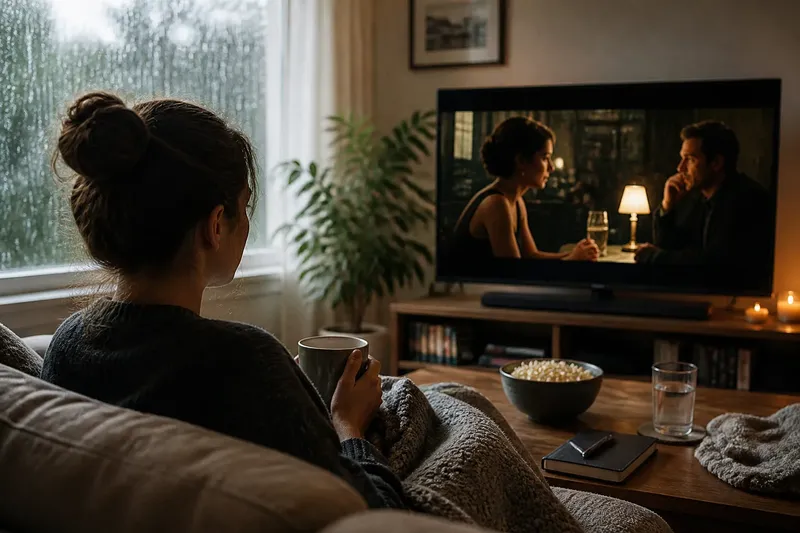
Rain taps the window as the opening music of a familiar film begins. You know the next scene, and your phone is within reach; instead of checking it, you settle on one question to carry through the rewatch. Watching a familiar film without multitasking can make small choices in the performances, sound, and pacing easier to notice.
Choose one question for the rewatch
Pick a question that can guide your attention without turning the film into homework. “How does this room come to feel safe?” gives you something specific to watch for; “What does everything mean?” asks too much at once.
A useful question can focus on a character’s confidence, a setting’s changing mood, or the way music shifts a scene. You do not need to force an answer. If the question stops fitting, let it go and watch on.
Use these prompts to choose a focus, then keep only one:
- Observation: The protagonist acts differently around someone they trust. Decision: If you notice a clear change, follow that relationship; if not, choose a different character behavior to watch.
- Observation: The same room appears at different points in the film. Decision: If its mood changes, track the visual or sound details that shape it; if it does not, focus on another setting.
- Observation: Music or silence affects how a moment feels. Decision: If the sound shifts your response, listen for when the change begins; if it does not, attend to the actors’ delivery.
- Observation: An ordinary action holds your attention longer than expected. Decision: If the film lingers on it, notice what comes before and after; if it moves past quickly, choose a scene with more breathing room.
- Observation: A character’s posture or pace changes during an exchange. Decision: If the change is visible, follow it through the scene; if not, focus on where the character directs their attention.
- Observation: A quiet passage appears between major plot events. Decision: If it changes the mood or prepares a later moment, stay with that transition; if it feels unrelated to your question, return to the broader scene.
Set up the room for an uninterrupted viewing
Before pressing play, settle the blanket, place a drink within reach, and choose a comfortable volume. Close unrelated browser tabs and move your phone away from your usual line of sight. If captions help you follow dialogue, turn them on before the opening scene.
Choose a version you can watch without stopping to compare editions or search for commentary. A disc, downloaded file, or streaming service can all work if you can stay with the film. Keep a notebook nearby only if a brief note helps you remember a thought; leave it closed if writing pulls your eyes from the screen.
What is not worth the effort is arranging an elaborate viewing ritual or trying to eliminate every sound in the house. A comfortable room and a phone out of reach are enough to start. If someone needs you, pause and respond rather than treating attention as a test.
Use familiarity to notice performance and rhythm
Knowing the plot can free you from waiting for the next revelation. Watch how a character handles a familiar object, how an actor listens during another person’s line, or how a lively room gives way to a quieter one. These details do not need to become clues; they can simply make a scene more vivid.
For a stretch, attend to the actors’ physical choices: posture, pace, and where their attention goes. Later, listen to the sound or notice how the frame holds the action. You are not trying to catalog every technique; you are seeing how one choice shapes the moment.
Familiarity also changes anticipation. Since you know when an argument or reunion is coming, notice what the film asks you to sit with beforehand: a held look, an empty hallway, or a shift in background noise. The pause can matter even when the plot is no longer a surprise.
Keep your attention through the urge to check
The impulse to reach for your phone may appear during a long walk, a quiet exchange, or a stretch between major events. When it does, stay with the next scene before deciding whether to pause. The film may give that quieter passage a purpose you would miss by switching screens.
If a question comes up, save it for a natural break or after the credits. Looking up a song, actor, or location mid-film can interrupt your attention and introduce other people’s interpretations before you have formed your own.
Say you are rewatching a family comedy and ask, “When does the main character stop performing confidence?” At the start, you notice a bright, quick delivery. Later, the character leaves a reply unfinished and listens instead. You keep watching rather than searching for an explanation; afterward, you can point to that contrast as a concrete change in the performance.
What should you do when attention slips?
Should you rewind after missing a scene?
Rewind if you want to see the moment again, especially if it connects to your chosen question. If the missed detail seems minor, continue and let the next scene restore your bearings.
Should you take notes during the film?
Write only a few words at a natural pause if they help you remember a detail. If writing makes you miss expressions, framing, or dialogue, wait until the film ends.
What if your chosen question stops helping?
Set it aside rather than replacing it with a list of new questions. You can watch the rest for the performances, the mood, or the pleasure of returning to a story you know.
Is it all right to pause for an interruption?
Yes. Pause to respond to someone or handle something that cannot wait, then return when you can give the film your attention. Watching without multitasking does not require ignoring real life.
Keep one observation after the credits
When the credits begin, take a moment before opening another screen. Name one scene or filmmaking choice that helped answer your question. A sentence in a notebook, a short voice memo, or a thought spoken aloud is enough.
Make the observation specific. “The ending felt warmer” is a starting point; “the character waits for an answer instead of filling the silence” points to something you can recall on screen. You do not need to explain the entire film or decide whether your response is correct.
If you still want outside information, write down the question and look it up later. Keep what you observed in the film separate from what you learn afterward. For a familiar film without multitasking, one clear observation is a useful result: it gives you a reason to remember how this viewing differed from the last.